Ferrari launch the all new Luce
The Ferrari Luce: A New EV Dawn or a Departure from Tradition?
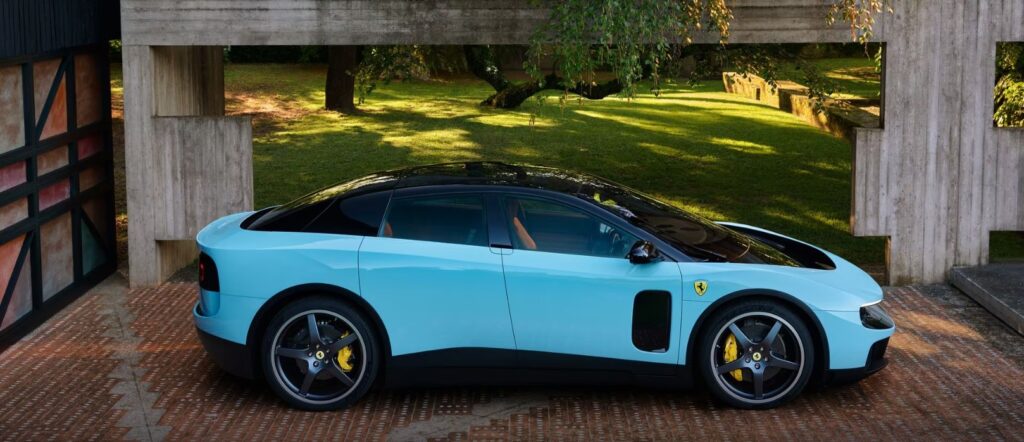
On 25 May 2026, in the historic city of Rome, Ferrari officially pulled the covers off its most significant, and arguably most controversial, vehicle in its 79year history: the Ferrari Luce. As the marque’s first fully electric production car, the Luce is not merely a new model; it is a declaration of intent for the Prancing Horse’s future.
Market Reaction: A Rough Ride for the Share Price
The automotive world and, more sharply, the financial world has reacted with volatility. Following the unveiling, Ferrari’s stock (RACE) took a notable tumble. Shares on the Milan exchange fell by as much as 8% on Monday 26th, followed by a further decline on Tuesday, effectively wiping several billion euros from the company’s market capitalisation.
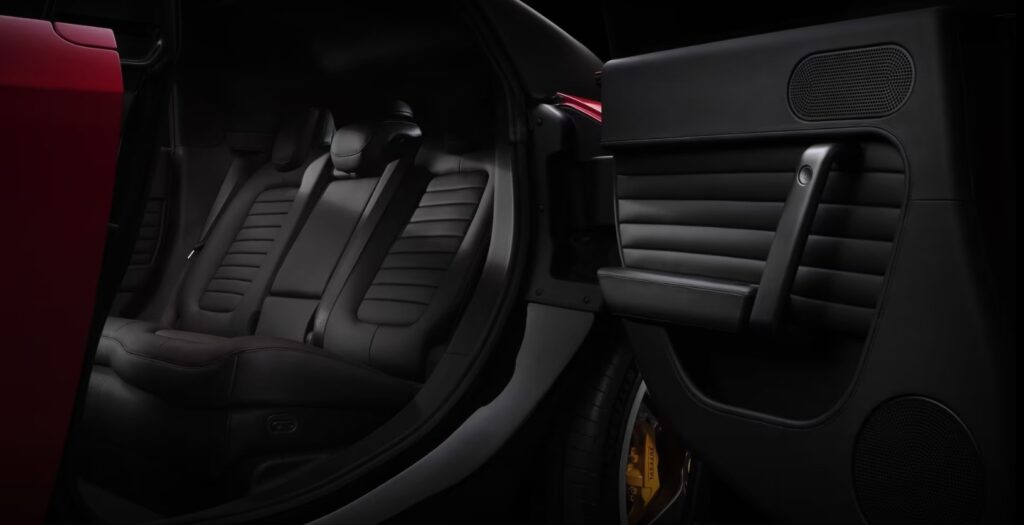
Investors and market analysts have expressed a mix of scepticism and “range anxiety.” While the brand commands immense loyalty, the leap from combustion-powered sports cars to a heavy, five-seat, four-door electric GT has raised fundamental questions about whether Ferrari’s unique pricing power will hold firm in the ultra luxury EV segment. Concerns have also been cited regarding the high capital expenditure required to develop the Luce’s bespoke 880 volt architecture and in house powertrain components, contrasting sharply with competitors who are currently slowing their electric transitions.
The Strategy: Why the Luce?
The introduction of the Luce is far more than a simple response to regulatory pressure. While the global shift toward Zero Emission Vehicle (ZEV) mandates and increasingly stringent emissions regulations creates a difficult backdrop for manufacturers of high displacement engines, Ferrari has framed the Luce through its “multi energy strategy” and “technological neutrality.”
Rather than viewing electrification as a chore forced by legislation, Ferrari’s leadership has positioned the Luce as an opportunity to expand its design potential. By bringing the engineering, development, and manufacturing of the electric motors and 122kWh battery pack in house, Ferrari is aiming to maintain its margin and pedigree. This move ensures that the company retains control over the “DNA” of the vehicle, viewing electricity simply as another medium through which to deliver performance, rather than a compromise.
Engineering the “Ferrari Feel”
The engineering specifications of the Luce are, by any measure, staggering:
- Powertrain: Four synchronous, permanent magnet electric motors (one per wheel) produce a combined 1,050hp.
- Performance: A 0–62mph sprint in 2.5 seconds, reaching a top speed of over 192mph.
- The “Sound” Problem: One of the most common critiques of EVs is the lack of aural drama. Ferrari has addressed this with a patented system that uses a precision accelerometer on the rear axle to capture the actual mechanical vibrations of rotating components. This signal is then filtered, equalised, and amplified much like an electric guitar to provide an authentic, functional soundscape that changes based on driving mode and load, both inside and outside the car.
Design and Controversy
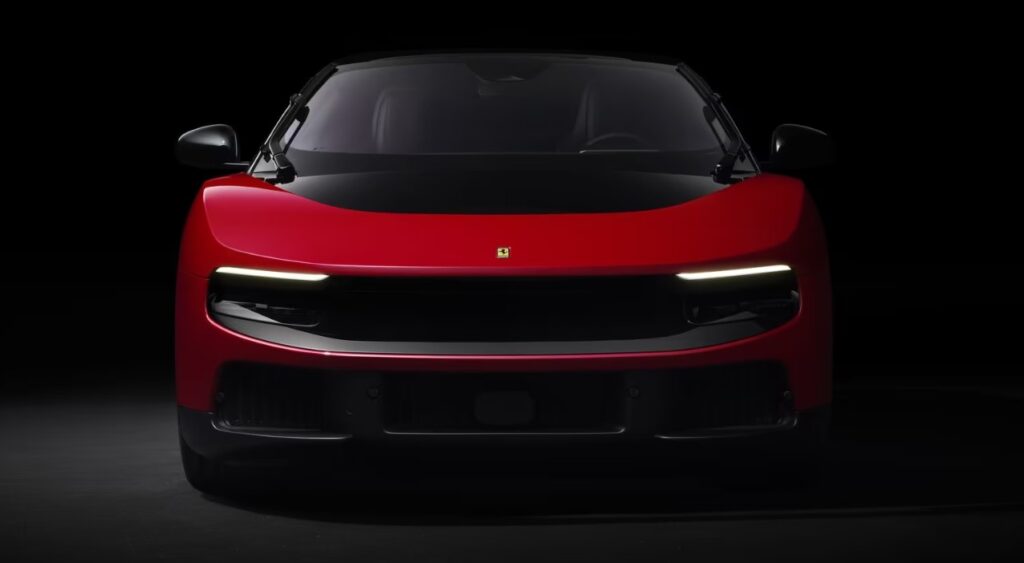
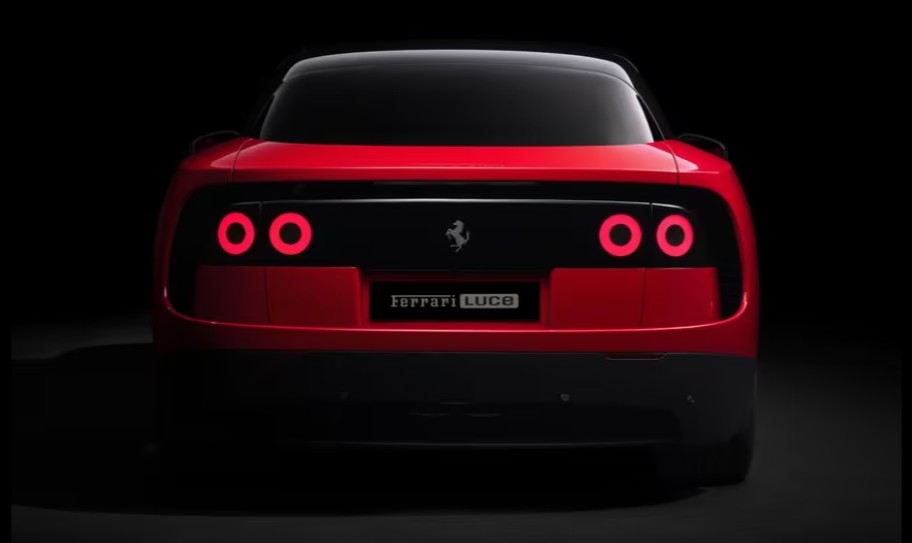
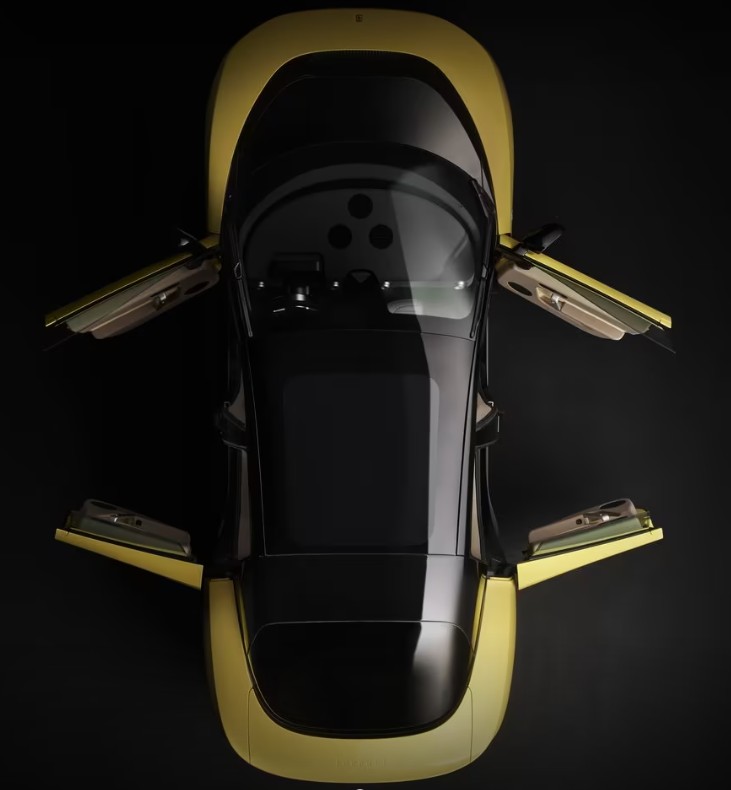
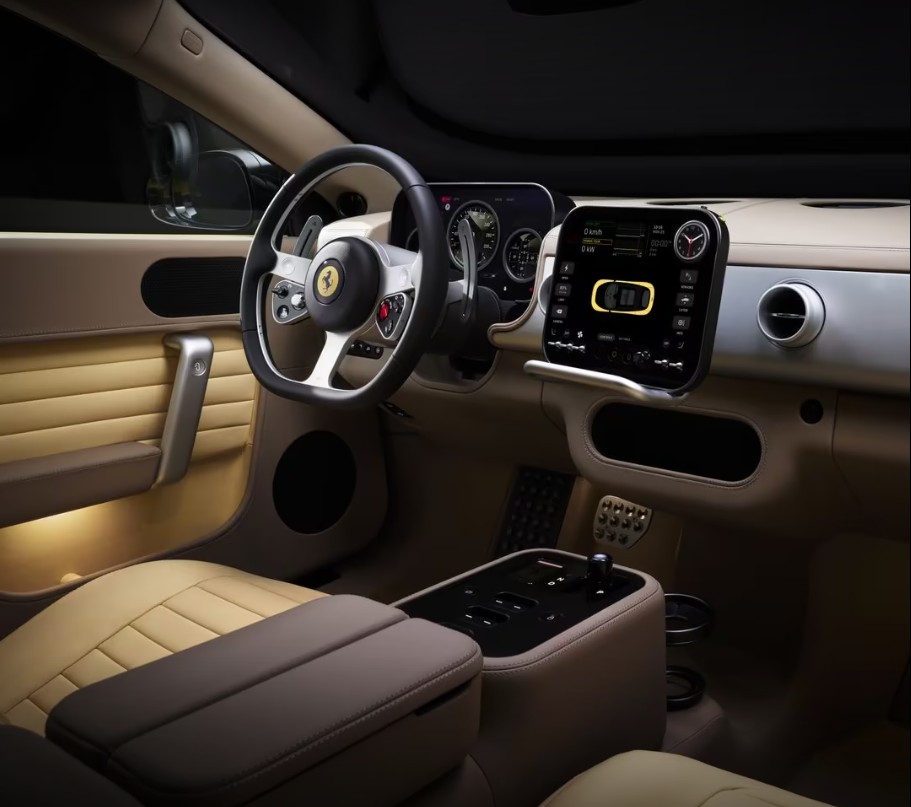
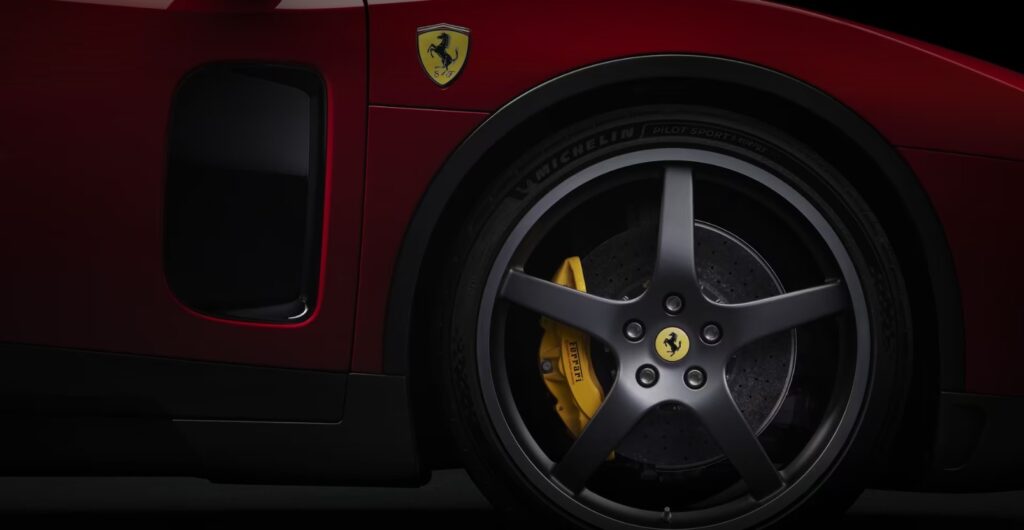
The aesthetics of the Luce have polarised opinion. Designed in collaboration with Sir Jony Ive and Marc Newson’s creative collective, LoveFrom, the car abandons traditional mid-engine proportions in favour of a sleek, minimalist, four-door GT silhouette.
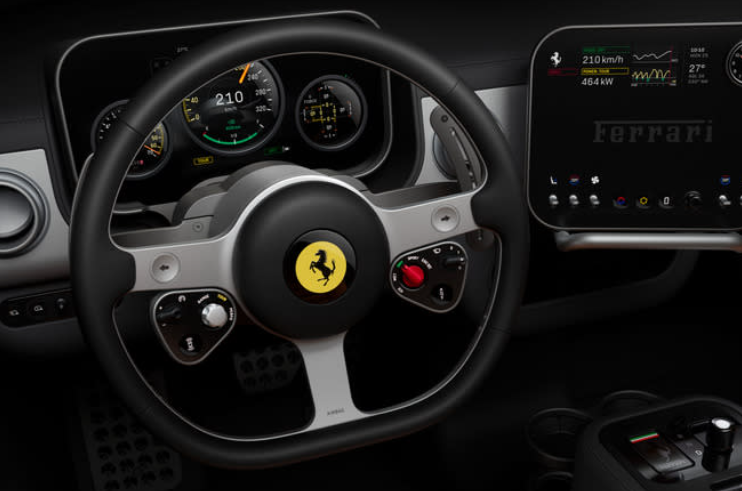
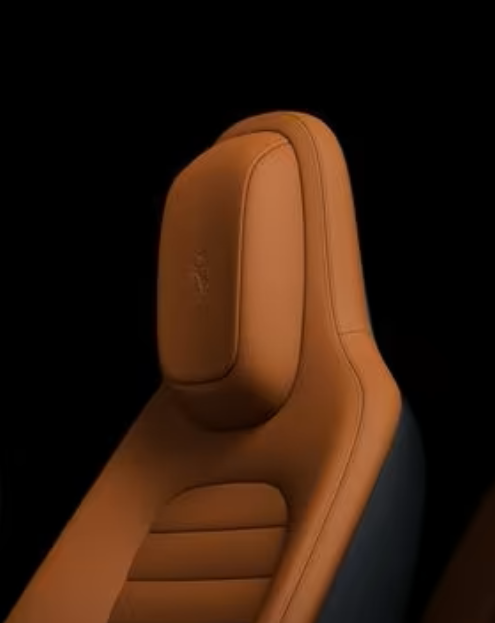
The cabin is a radical departure from the “tech-heavy” interiors of modern rivals. Eschewing large, singular screens, it features a clean, OLED-driven interface and physical switchgear a deliberate nod to tactical engagement. Many traditionalists have struggled with the silhouette, with some online commentators cruelly comparing its shape to a luxury minivan, though the technical achievement of packaging 2,260kg into such a balanced, aerodynamically efficient form is being praised by design critics.
A New Chapter
Deliveries are slated to begin in the fourth quarter of 2026, with an eye watering base price of approximately €550,000.
Whether the Luce will be remembered as the moment Ferrari lost its way or the moment it masterfully navigated the transition to the electric age remains to be seen. What is clear is that Ferrari has chosen to lead rather than follow, betting that its customers will value the brand’s relentless commitment to in house engineering and performance, even when the fuel source changes from petrol to electrons.
The motoring world will be watching closely as the first press drives take place later this year only then will we know if the Luce truly drives like a Ferrari, or if it is simply a very fast, very expensive piece of industrial design.
Images courtesy of Ferrari Press Office